
A tank doing its job
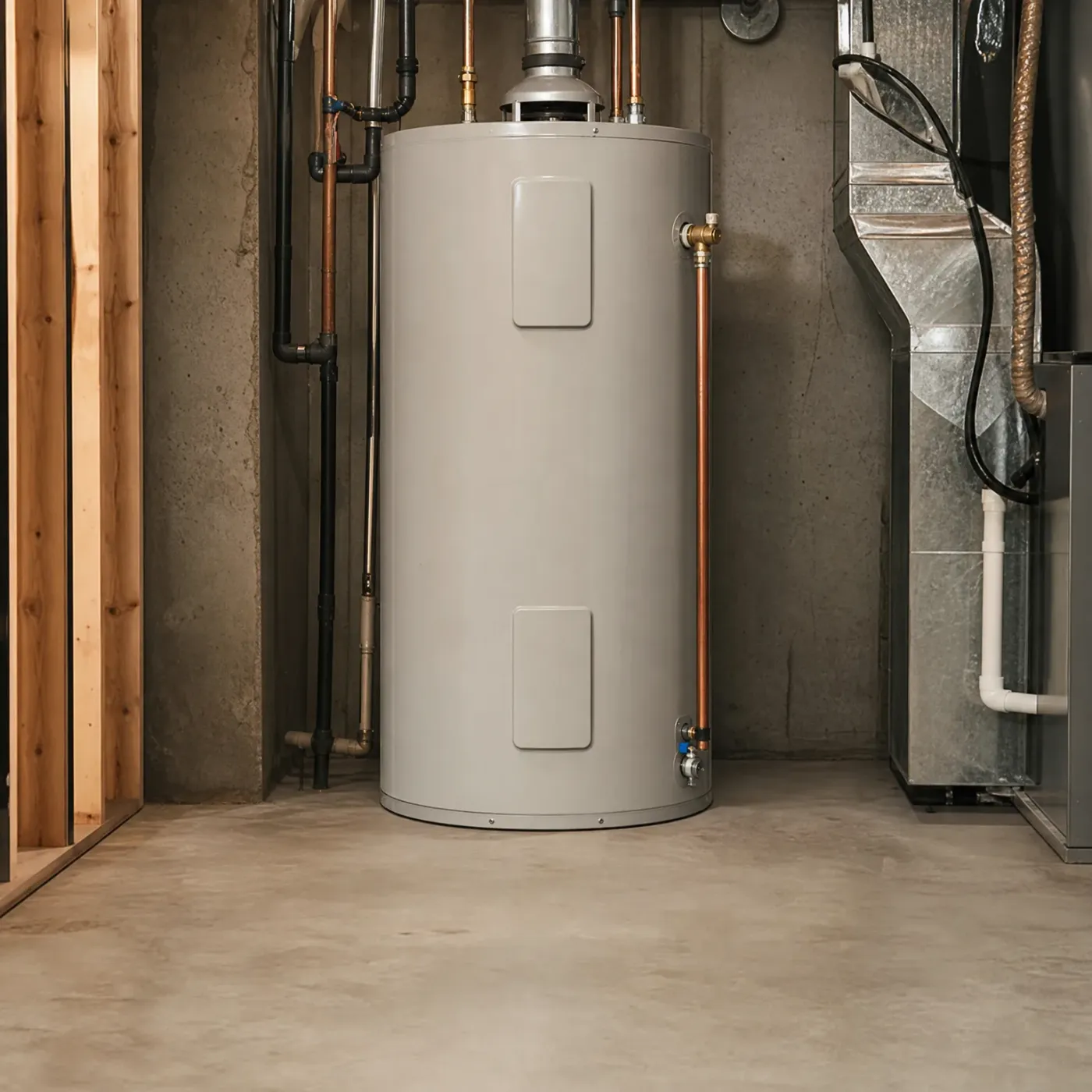
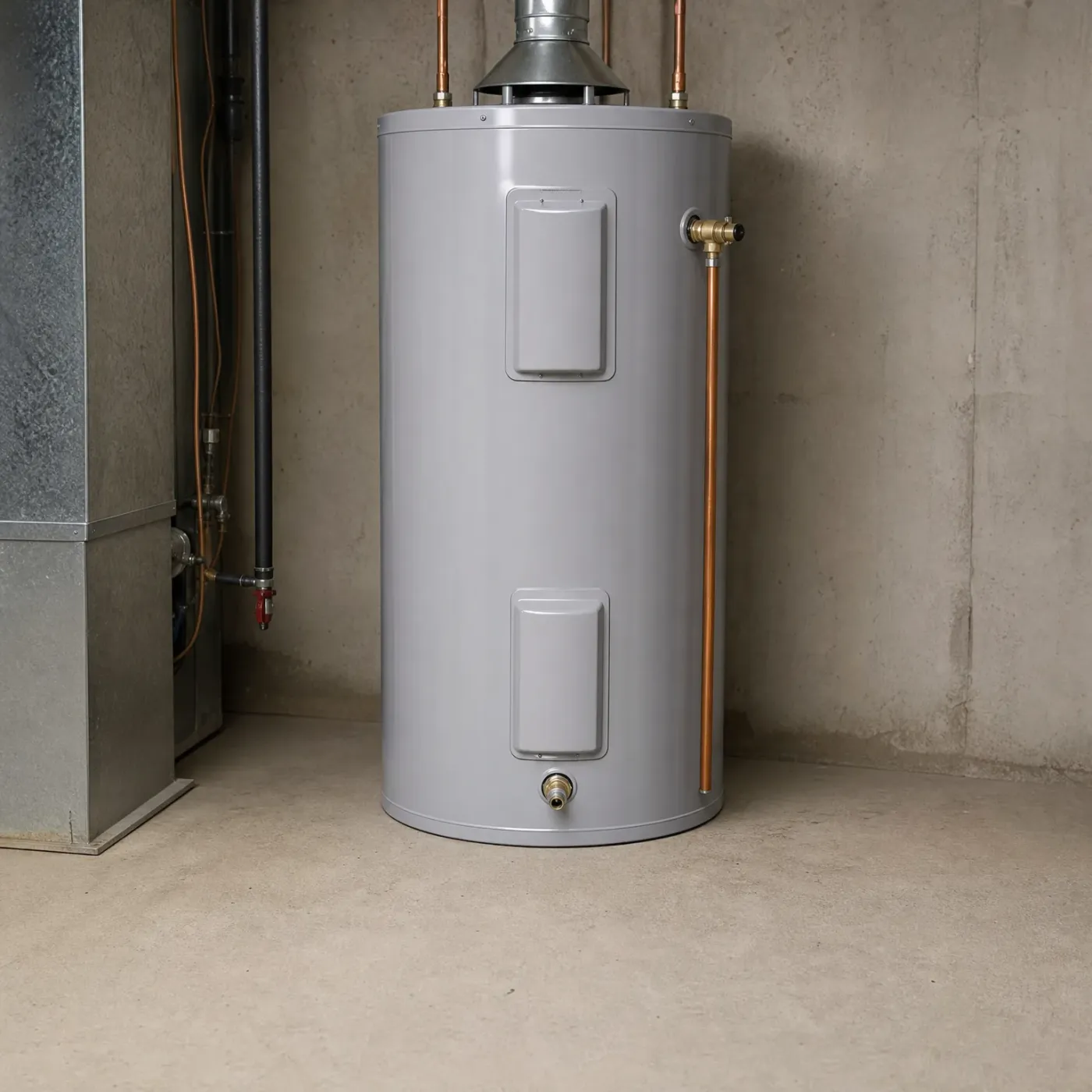
This is what a correct setup looks like. The pipes run clean along the ceiling, the connections are tight, and the tank sits level on the floor. Nothing here hints at a problem, which is the point.

Most New Mexico homes already run on gas, and that's the better choice for a water heater too. Gas recovers faster, so a family doesn't run out of hot water back to back showers or a shower stacked against a load of laundry doesn't leave anyone cold. It also keeps working through a power outage if you have a standing pilot model, which matters more here given how dry summer storms can knock out power for a stretch. Electric still makes sense if your home has no gas line run to it, since installing one just for a water heater adds a real cost. If gas already reaches your house, staying with gas when you replace the unit is usually the straightforward call. If it doesn't, a modern electric model will serve you fine, just with a slower recovery between uses.
Old tank gets disconnected and drained through the drain valve
Gas or water lines get capped off and the vent disconnected
New tank is set, leveled, and connected to water and gas lines
Vent pipe and gas connections are tested for a tight seal




A water heater installed wrong is the kind of problem you don't find out about until it's draining the laundry room or backing exhaust into the house instead of out the vent. That's not a job to hand to whoever answers the phone first. Someone who installs these every week in New Mexico knows which tanks hold up against the hard water that comes out of the tap here, how the vent run needs to sit so it actually draws, and where the old gas line connections tend to fail when a new tank goes in. One contractor gets your request, local and licensed, so you're dealing with a single person who already knows this equipment rather than fielding calls from a handful of strangers trying to win the job. Send it and that search is off your plate. Whether your current tank is on its way out or you're just done waiting for it to fail on its own, this is the part where you stop carrying it alone.
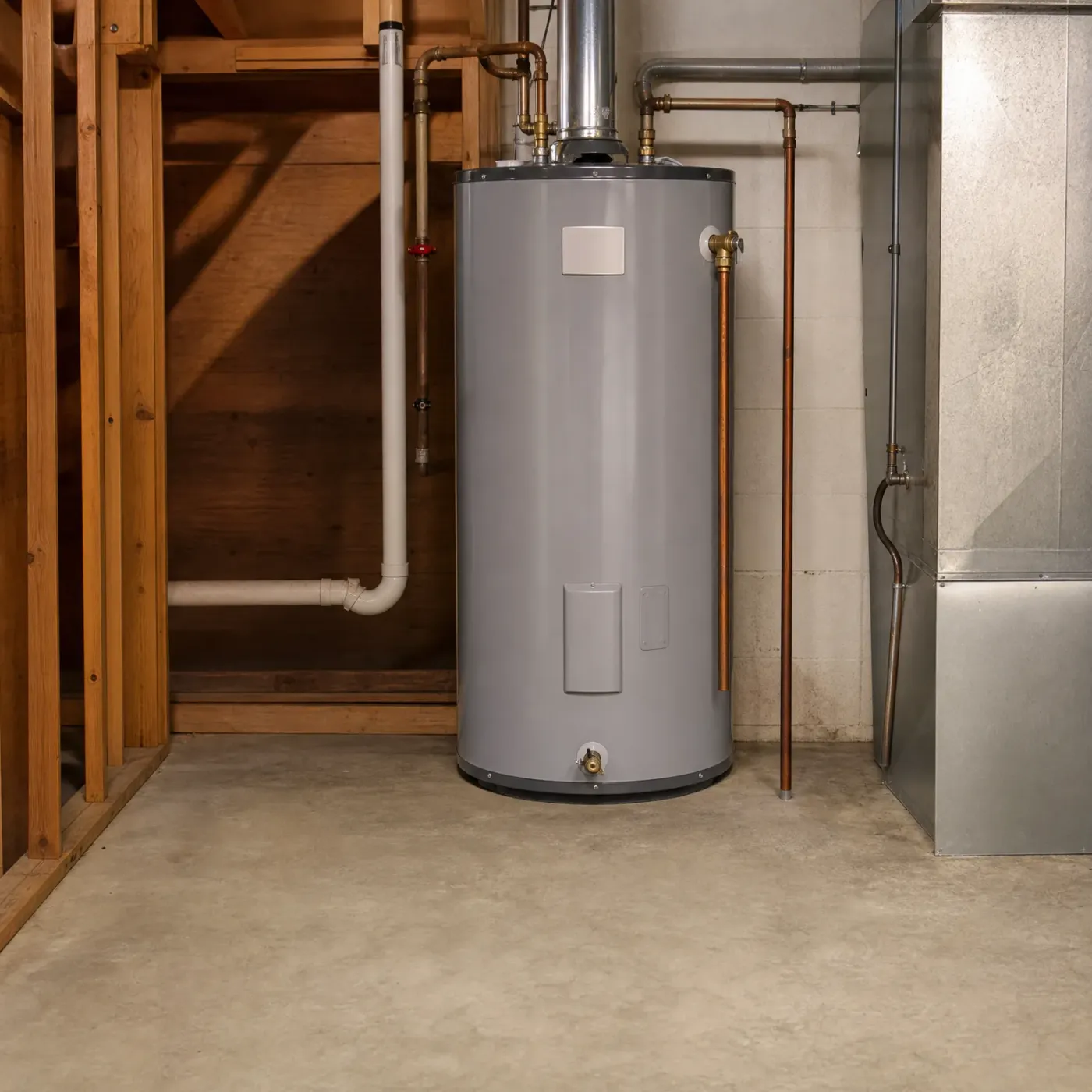
This is what a correct setup looks like. The pipes run clean along the ceiling, the connections are tight, and the tank sits level on the floor. Nothing here hints at a problem, which is the point.
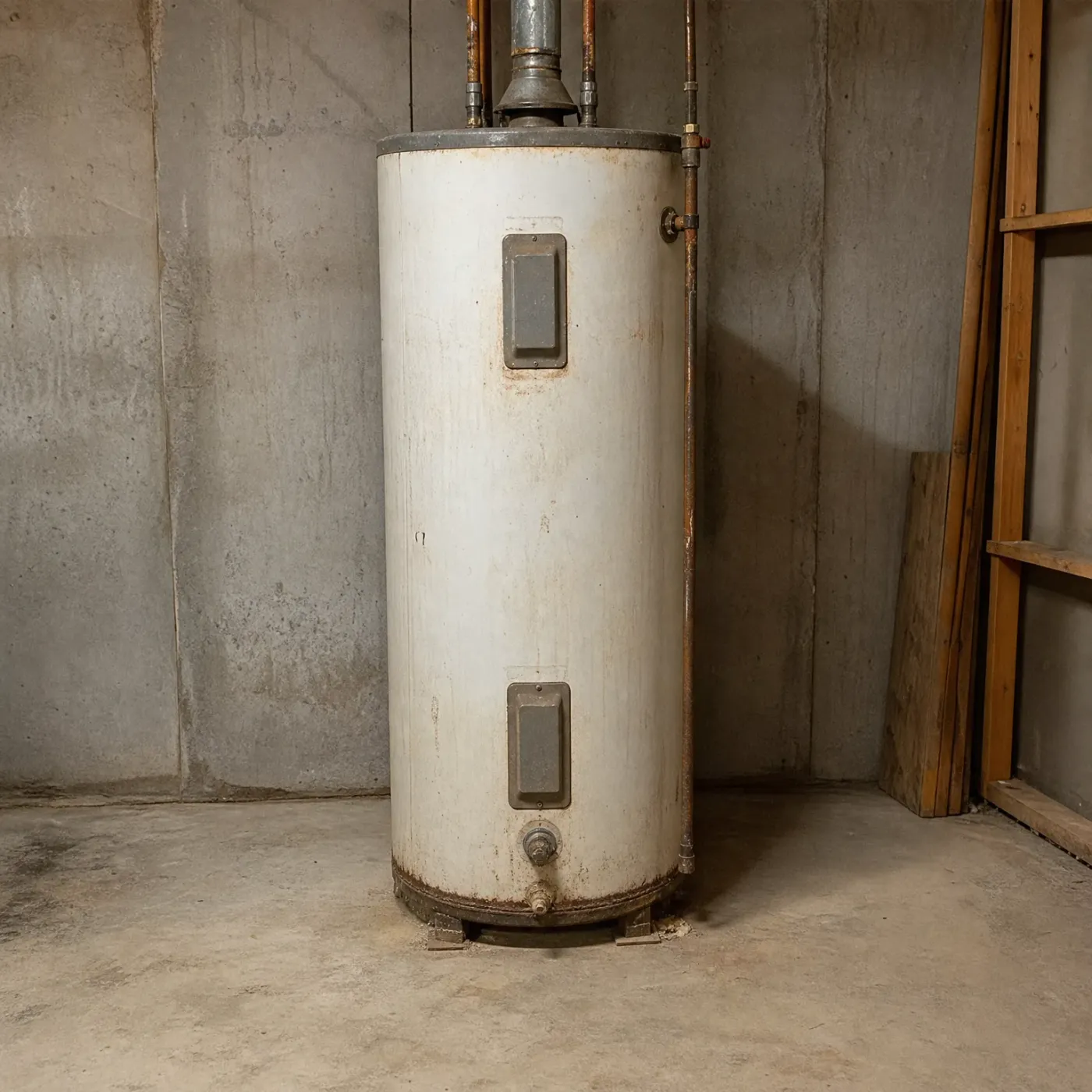
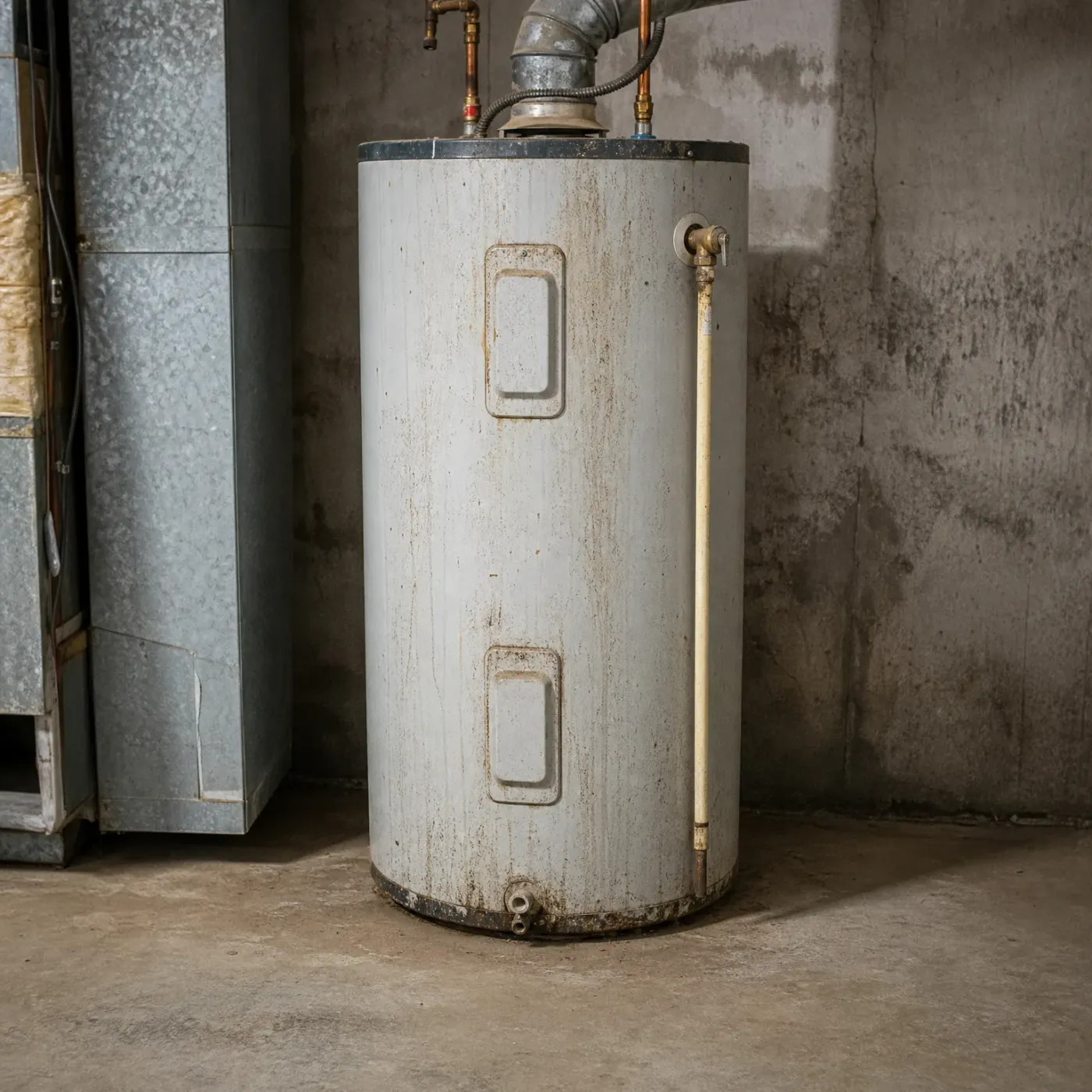
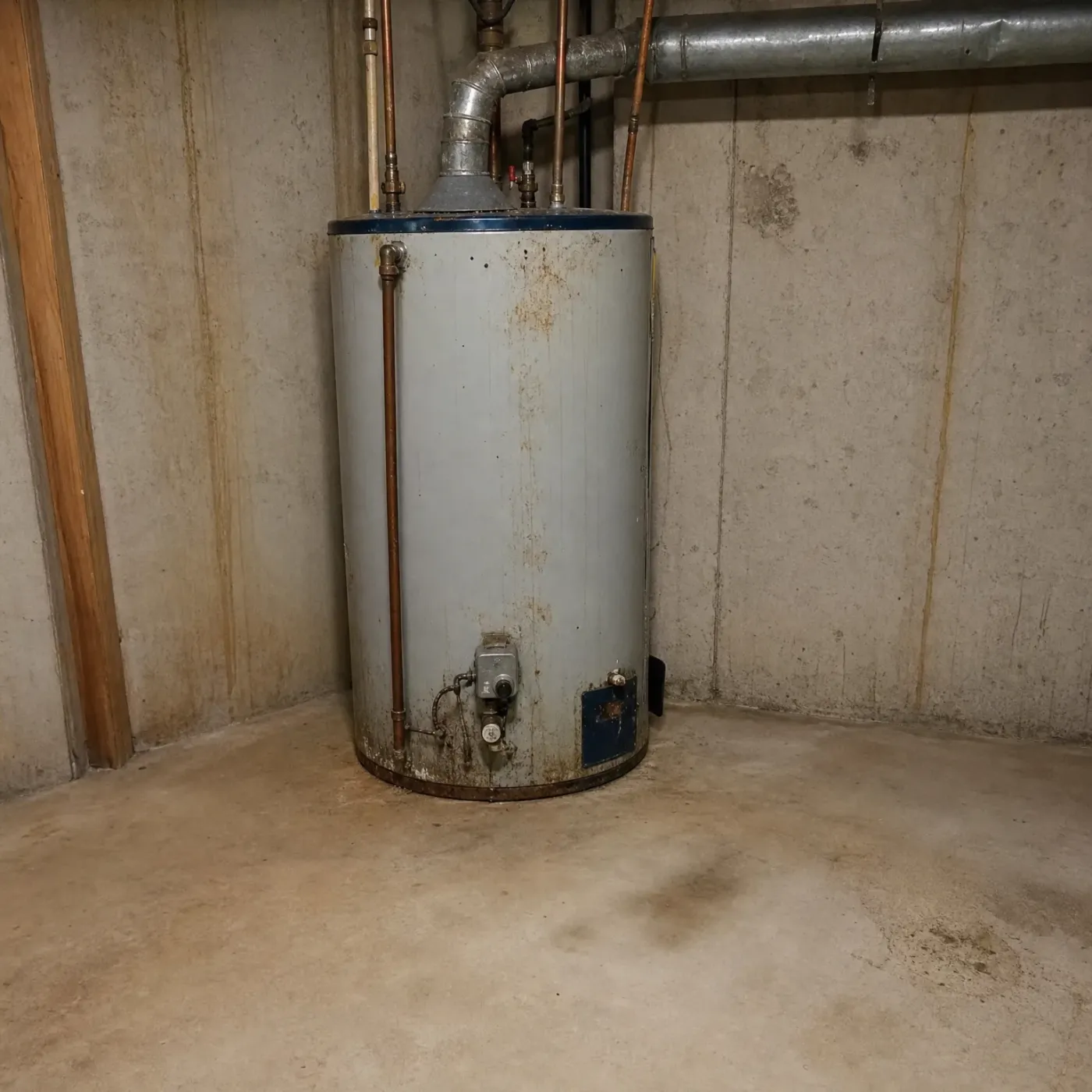
Rust like this on the tank and the fittings means the steel underneath is giving out. A tank in this shape can hold water until the morning it doesn't, and you find out from the water on the floor, not a warning first.


If your house is one of the roughly six in ten here that already runs on gas, a gas water heater just means one more appliance tied into a line that's already there. If yours is one of the rest, that's the one thing worth checking before you decide.
ACS 2020-2024 5-year B25040
Gas is the better fit for most homes in New Mexico, and if yours already runs on gas for heat and cooking, the line is there and the decision is simple. The part that matters now is the install. A tank that sits level, a gas connection that's tight, a vent that actually carries exhaust outside instead of letting it drift back into the house, that's what separates a water heater that runs for years from one that causes problems nobody saw coming.
Getting that right isn't about finding just anyone with a van and a toolbox. Someone who works on these systems all year in this area has already seen which fittings loosen first, which vent setups get installed wrong the first time, and what the dry summer heat here does to connections over time. That kind of knowledge doesn't come from a manual. It comes from doing the job on homes like yours, season after season.
That's also why sending one request matters more than it might seem. Instead of fielding calls from a handful of companies you've never heard of, all trying to win the job, you're connected with one licensed contractor who already knows the codes and conditions specific to New Mexico. No sorting through strangers, no guessing who's qualified.
Once that request is sent, the search is no longer yours to carry. Someone who knows this equipment and this area takes it from here.





Only one pro gets your request, so you hear from one company.
You only hire the pro if you want to.