How long a water heater lasts in New Mexico

Skip collecting and comparing quotes for the new water heater.

Skip the calls

A water heater in New Mexico usually lasts 10 to 15 years. Hard water in a lot of the state shortens that, since mineral buildup settles in the tank and on the heating element or burner assembly, making the unit work harder to heat the same amount of water. Most homes here run gas water heaters, and the tank corrodes from the inside over time no matter how well it's maintained. You'll usually see it coming: the water takes longer to heat, it smells off, or it runs out faster than it used to. Once a tank starts leaking at the bottom, it's done, and that's not something to wait out. If yours is past 10 years, it's worth having someone look at it before it fails on its own schedule instead of yours.

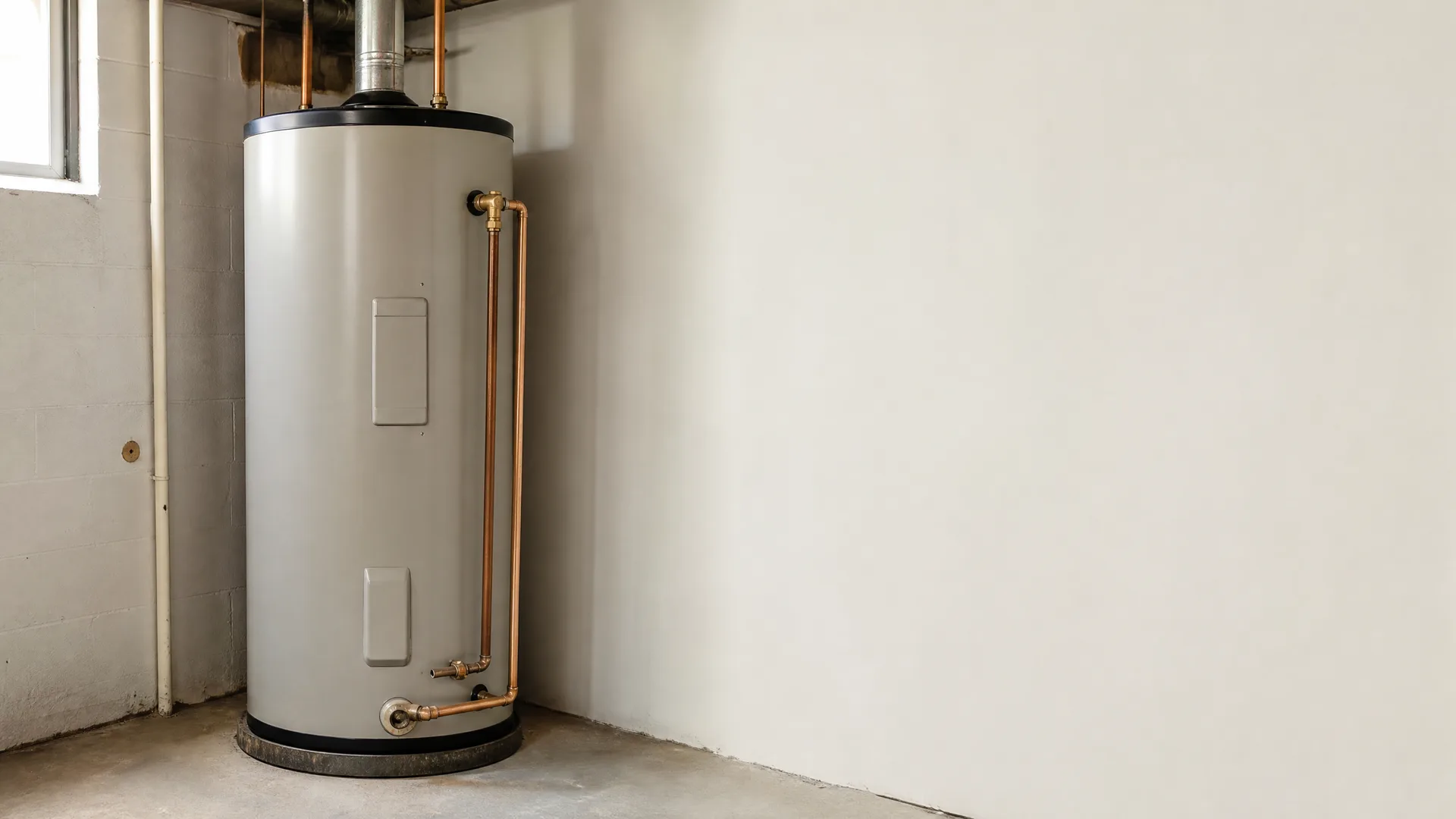
A tall gray cylindrical water heater with copper piping and a flue stands in the corner of an empty basement room with concrete block and painted walls.

Why the tank fails first

Gas water heaters heat from a burner under the tank. Sediment that settles there acts like a blanket between the flame and the water, so the burner runs longer to do the same job. Over years that heat stress wears on the tank's lining and the metal underneath. Once a tank starts to leak at the seam or fitting, that's the tank itself failing, not a part you can replace. Most contractors will tell you a leaking tank means replacement, not repair.

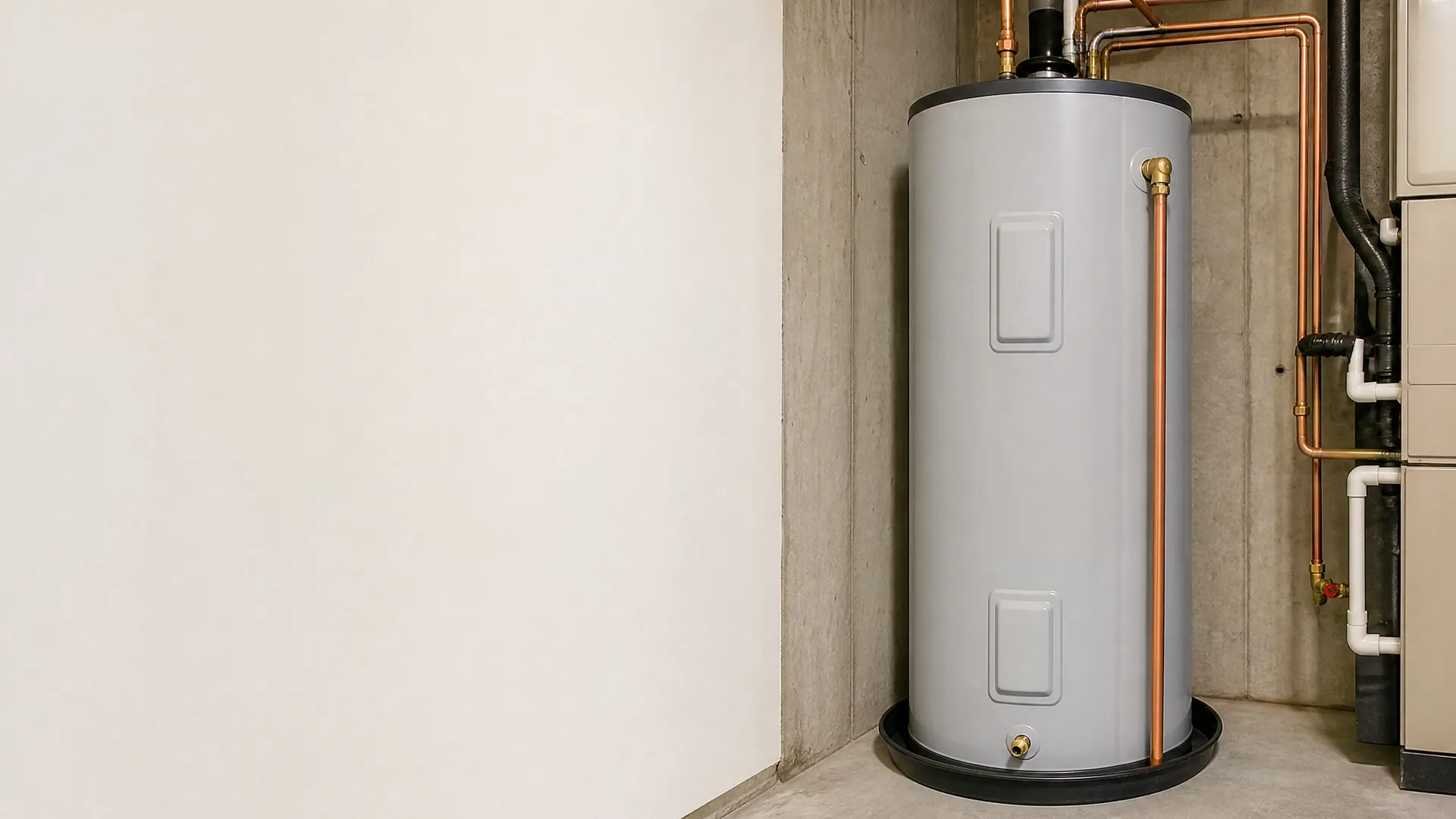
A gray cylindrical water heater stands in a drain pan against a concrete wall, with copper and white pipes running along the wall to the right and a plain light wall on the left.

What a yearly flush buys you

Draining a few gallons from the tank once a year clears out sediment before it builds into a solid layer. Homes on well water or with harder municipal supplies tend to collect sediment faster, so that yearly flush matters more here than it would with naturally soft water. Skipping it for several years in a row is one of the more common reasons a water heater in this state fails closer to year 8 or 9 than year 15.

Still Going, or Done For

Tank still working

  • Water heats up in a normal amount of time and holds that heat through a shower or a load of dishes.
  • No rust-colored water, no puddling at the base, no popping or rumbling sounds from sediment hitting the burner.
  • The pressure relief valve still works and the gas burner lights without hesitation each time it cycles on.
  • If the unit came with the house and nobody has flushed the tank, sediment is building even if nothing looks wrong yet.
  • A unit in this range is worth repairing if something minor fails, like a thermocouple or a heating element.

Tank showing its age

  • Water takes noticeably longer to get hot, or runs out faster than it used to for the same household routine.
  • Rust in the water or around the tank's seams means the steel is corroding from the inside.
  • Any water pooled at the base of the tank points to a crack or a failed seam, and that only gets worse.
  • A tank past 10 to 15 years that needs a repair is usually a candidate for replacement instead, since the tank itself is what's failing.
  • Popping or cracking sounds during heating mean enough sediment has built up to stress the tank wall, not just the burner.
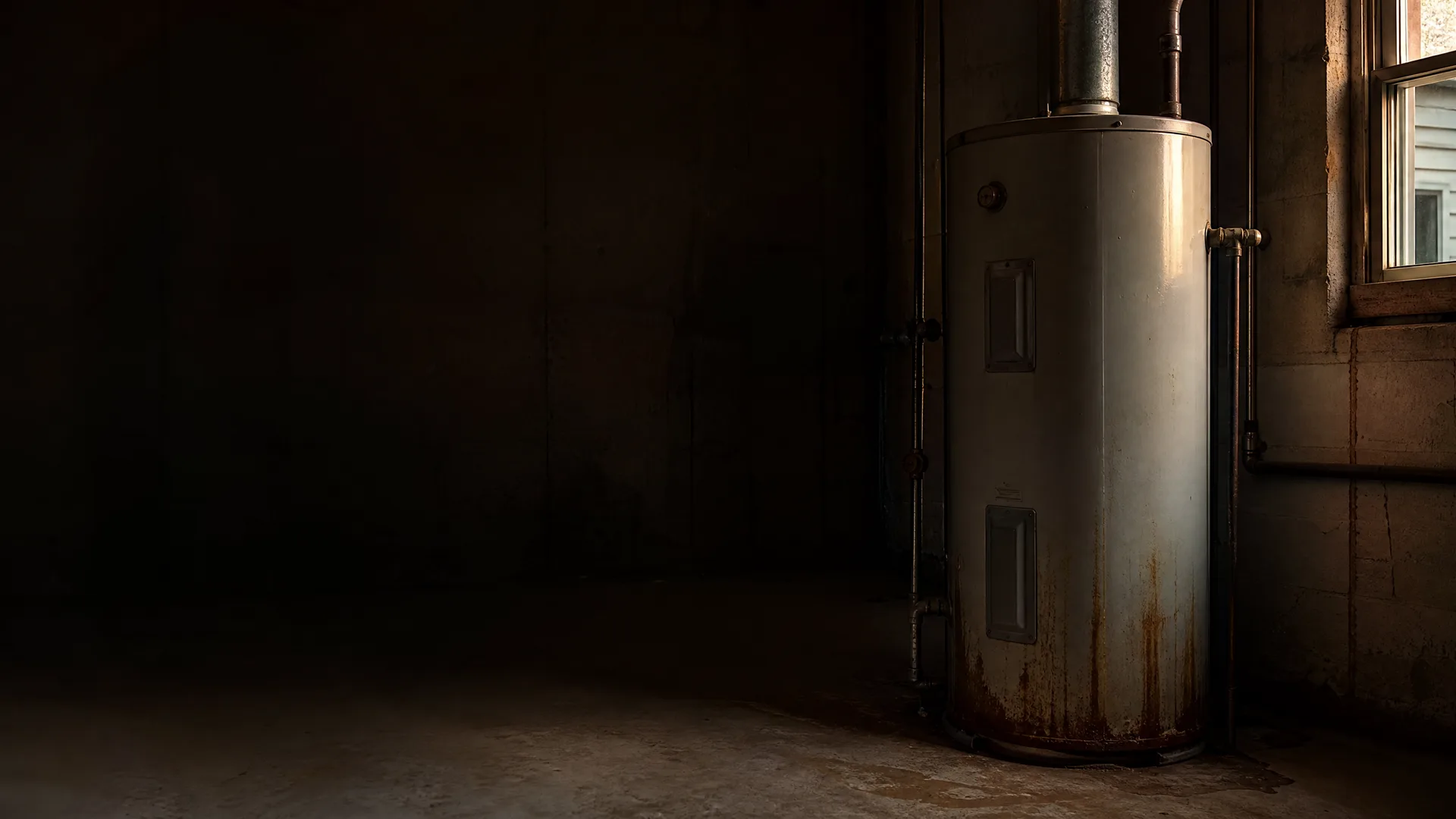
A rusting cylindrical water heater with connected pipes stands against a dim concrete basement wall near a window.

You go down to the utility room to grab detergent and the light's already on from earlier. It's evening, the heat of the day finally breaking outside. The tank sits in the corner the way it has for years, and this time you notice the rust streaks running down its side to the floor, dried in some places, still dark and wet in others. You crouch and touch the base. Damp. Not dripping, just damp, like it's been working up to something. You think about how many showers get run through this thing on a given night and stand there a second longer before you go back upstairs to tell someone.


Skip calling around

Your request goes to one pro, not a list of companies.

It costs nothing to send, and you don't have to hire anyone.

A closed laptop and a cream mug of coffee on a coaster sit on a dark wooden table, with a potted plant at left and a kitchen counter, tiled backsplash and shelf of ceramics in the background.

What actually sits at the bottom of the tank

Most gas water heaters in New Mexico draw from a municipal supply with enough hardness to leave mineral behind every time the tank refills. That mineral settles as sediment on the bottom, right over the burner. A thin layer doesn't do much. A thick one insulates the water from the flame, so the burner has to fire longer and hotter to get the same result, and the steel above it takes that heat instead of the water absorbing it. That's the piece most people never see, because it happens below the waterline, years before anything leaks.

A plumber who works on tanks all over this state can tell how far along a unit is by the sound it makes when the burner kicks on, or by how long the water takes to get hot compared to when the tank was new. Finding someone who knows that without a long explanation usually means calling a few companies, describing the same symptoms each time, and waiting on quotes to compare. Matching with one licensed local contractor skips that, and the call goes to someone who already knows what a New Mexico tank in this condition usually needs.

A gray upholstered sofa with a textured cushion sits beside a dark round side table holding a vase of green foliage, with a table lamp and sheer-curtained window behind.
A gray cylindrical water heater standing in a basement corner against a concrete wall, with copper and black pipes, a metal flue, and ductwork nearby, next to wood framing on the right.

Tank holding up

The jacket is clean, the fittings are dry, and the flue draws straight up without rust at the seams. Copper lines in and out, a steady gas line, nothing seeping at the base. A tank like this is doing its job quietly, and there's nothing here that needs a call yet.

A gray cylindrical gas water heater with copper and black pipes stands in the corner of a basement with concrete block walls and a bare concrete floor.

Tank in trouble

Look at the base where the gas valve and control sit. Moisture there, or a rust color creeping down the jacket, means the tank itself is giving out, not just a part on it. Once a gas water heater starts leaking from the tank, no repair fixes that. It needs replacing.

A woman in a knitted shawl sits in a living room with a fireplace, shelves, a sofa with cushions, and a lamp by a bright window, looking off to the side.
A woman with long brown wavy hair in a green shirt over a white top stands in a living room with built-in white shelves, a ceiling fan, a potted plant and a sliding glass door.
A woman with shoulder-length gray-streaked hair in a light gray knit sweater stands smiling and looking off to the side in a living room with a sofa, houseplant, framed picture, and sunlit sliding glass door.
A woman with shoulder-length curly gray hair wearing a gray knit sweater stands near a window with a sheer curtain, looking to the side, with a blurred interior room behind her.

Replace it now, while you're choosing the time, and you pick the unit, the spot it goes, and who installs it. A local plumber licensed for this work can do it on a day that works for your house.

Wait for it to fail, and the choice gets made for you. A burst tank means water on the floor, a scramble to find anyone who can come same day, and showers running cold until it's done.

A white cylindrical water heater with rust stains and two access panels stands in a basement corner between a painted concrete block wall and a bare concrete wall, with metal pipes running up and alongside it on a concrete floor.
Before you get your water heater installation
A gray cylindrical water heater standing on a concrete floor in a basement corner, with copper pipes and a metal duct running overhead along bare concrete walls.
After you get your water heater installation

61.7% of homes statewide heat with gas

Most houses in New Mexico heat water with gas, same as they heat the house. That means a burner under the tank, which is exactly where sediment collects when the water running through it is hard. Worth knowing what's heating your water before you start worrying about what's wearing it out.

ACS 2020-2024 5-year B25040

What you've learned about your tank

  • Most gas water heaters in New Mexico last 10 to 15 years before the tank gives out.
  • Hard water speeds that up by leaving sediment on the bottom, right over the burner.
  • Rust-colored water, puddling at the base, or popping sounds mean the tank is near the end.
  • A tank still heating water fast and holding heat through a shower has some life left in it.
  • Replacing it on your schedule means you choose the unit and the install date, not a burst tank at 6 a.m.
  • A local plumber who works on these tanks every season knows which parts give out first in this water.

Ten to fifteen years is the window for a gas water heater here, and hard water is the reason so many don't make it to the far end of that range. Sediment builds on the bottom of the tank, right over the burner, and the burner works harder and longer to get the same result. That extra strain is what wears through the tank's lining eventually. You don't need to guess where your tank stands. Check the water temperature and how long it holds heat through a shower. Look at the base for rust or a puddle. Listen for popping or rumbling when the burner fires, which is the sound of sediment getting hit directly by the flame. If none of that shows up, the tank still has some life in it. If it does, you're closer to the end than the start. The real advantage of catching it early isn't speed or savings, it's choice. You get to pick the unit, where it goes, and when a plumber comes to install it, instead of dealing with a burst tank and water on the floor some morning before anyone's had coffee. A local plumber who installs these tanks all year in this water knows which parts give out first, because they've pulled enough failed ones to see the pattern. That's worth something when you're deciding whether to wait or not.

A woman and a sleeping child wrapped together in a cream knitted blanket on a couch, with a potted plant, framed photo and lit lamp in the background.
A gray-haired woman in a cream knit sweater stands in a dimly lit kitchen at night, looking to her right, with a round loaf of bread in the foreground and a dark window and potted plant behind her.

Water Heater Installation

Describe it once

One installer gets your project, so there's no bidding war over it.

A black-framed smartphone standing upright against a plain white background, its screen filled with solid green.
Step 1 of 3: Equipment