Is a heat pump water heater worth it in New Mexico
A heat pump water heater pulls heat from the air instead of burning gas or running electric resistance coils, so it costs less to run than what most homes here have now. Whether it makes sense for your house depends on your garage or utility space, your current setup, and what you pay for power. A local contractor who installs these in New Mexico homes can look at your situation and tell you straight.
A heat pump water heater is worth it for most homes in New Mexico, because the dry climate here is exactly what the unit needs to work well. It pulls heat out of the surrounding air, and dry air holds less moisture to fight through, so the unit isn't straining against humidity the way it would in a wetter state. The catch is that most homes here heat water with gas, so switching means running a new electric circuit to wherever the tank sits, which a gas-only setup won't already have. The unit also needs space around it, usually a garage or utility room, to pull in enough air to work. If your gas water heater is on its way out and you have the room and the electrical capacity, the switch makes sense. If you'd need to rewire the space just to make it fit, that cost is worth weighing before you decide.
Staying with gas
Your gas water heater heats on demand and doesn't care how dry or hot the air around it is. If it's working fine and the space it sits in is tight, there's less reason to touch it now. A new gas unit costs less upfront than a heat pump model.
Switching over
A heat pump water heater needs room to pull air through it, more than a gas tank needs around it. If yours sits in a cramped closet, that matters. An old gas valve or a tank showing rust at the base is usually a sign it's heating on borrowed time, and that's the point to look at a heat pump instead.
How does a heat pump water heater actually work?
You've heard a heat pump water heater pulls heat from the air, but that's about as far as the explanation usually goes. Before you put one in a closet or utility room, it helps to know what's actually happening inside it, because the mechanics explain why placement and space matter so much to how well it runs.
It moves heat with a compressor and refrigerant, the same way your fridge does, just in reverse
A fan pulls air from the room across a cold coil filled with refrigerant. That refrigerant absorbs the heat sitting in the air, then a compressor squeezes it until it gets hot enough to transfer into the water tank through a second coil. The air leaving the unit comes out several degrees cooler than it went in, which is why these units need a space with enough air volume around them, not a cramped closet with the door shut. In New Mexico's dry heat, there's no humidity added to the mix, so the unit draws heat without fighting condensation buildup on the coil the way it would in a muggier state. That's the whole cycle, repeated until the tank reaches temperature.
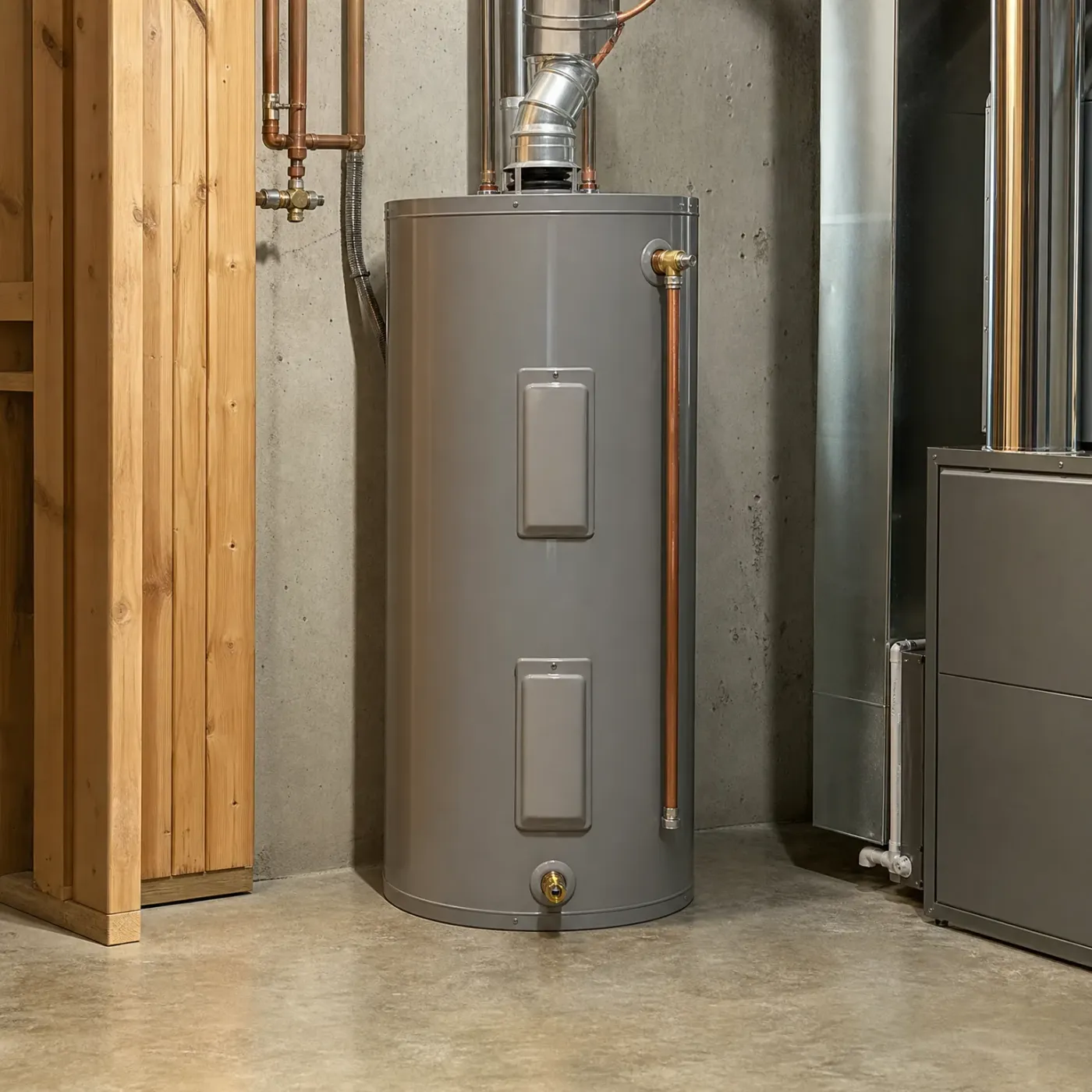
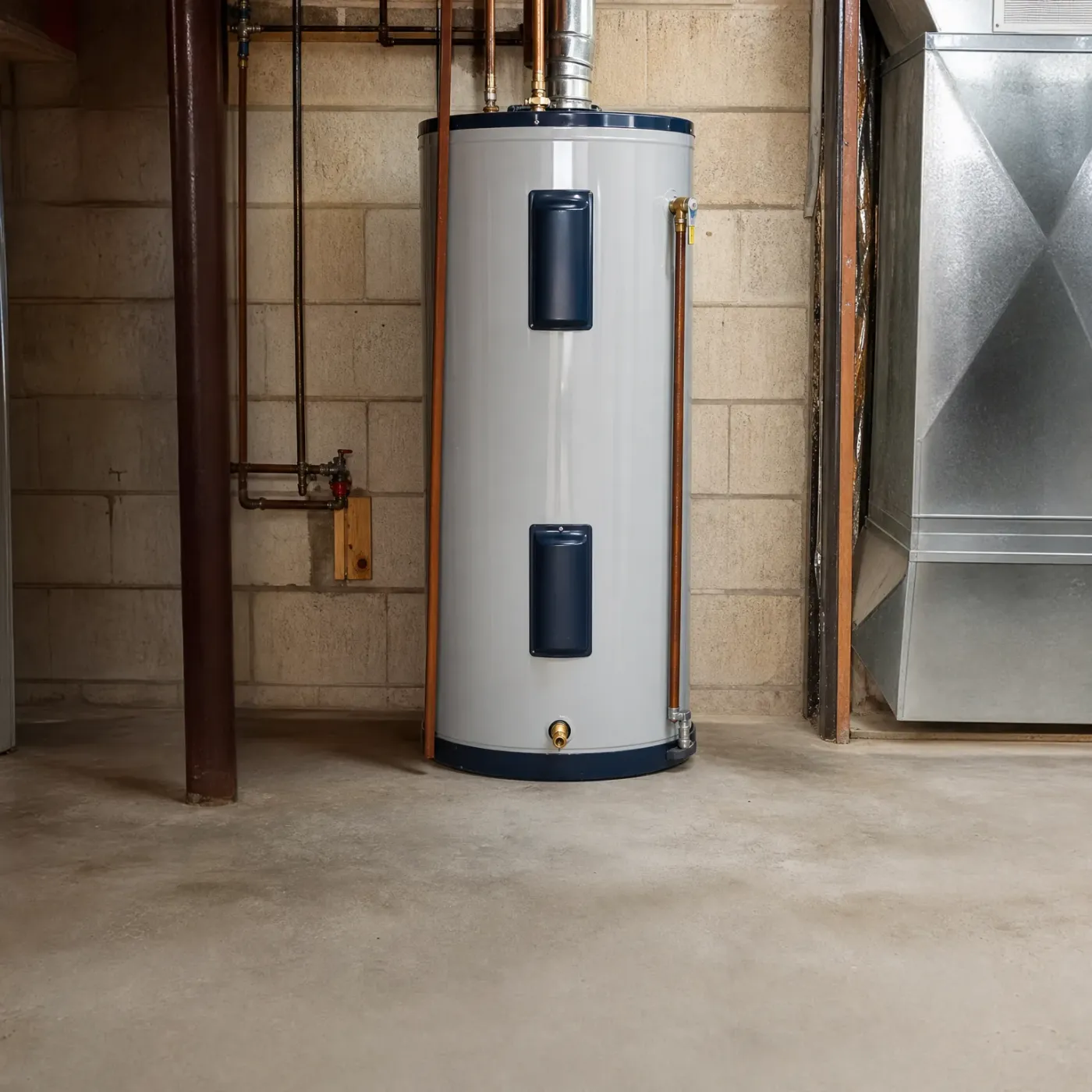
A working electric water heater like this one has no trouble finding space among the pipes and ductwork around it, and it'll keep running until something inside actually fails.
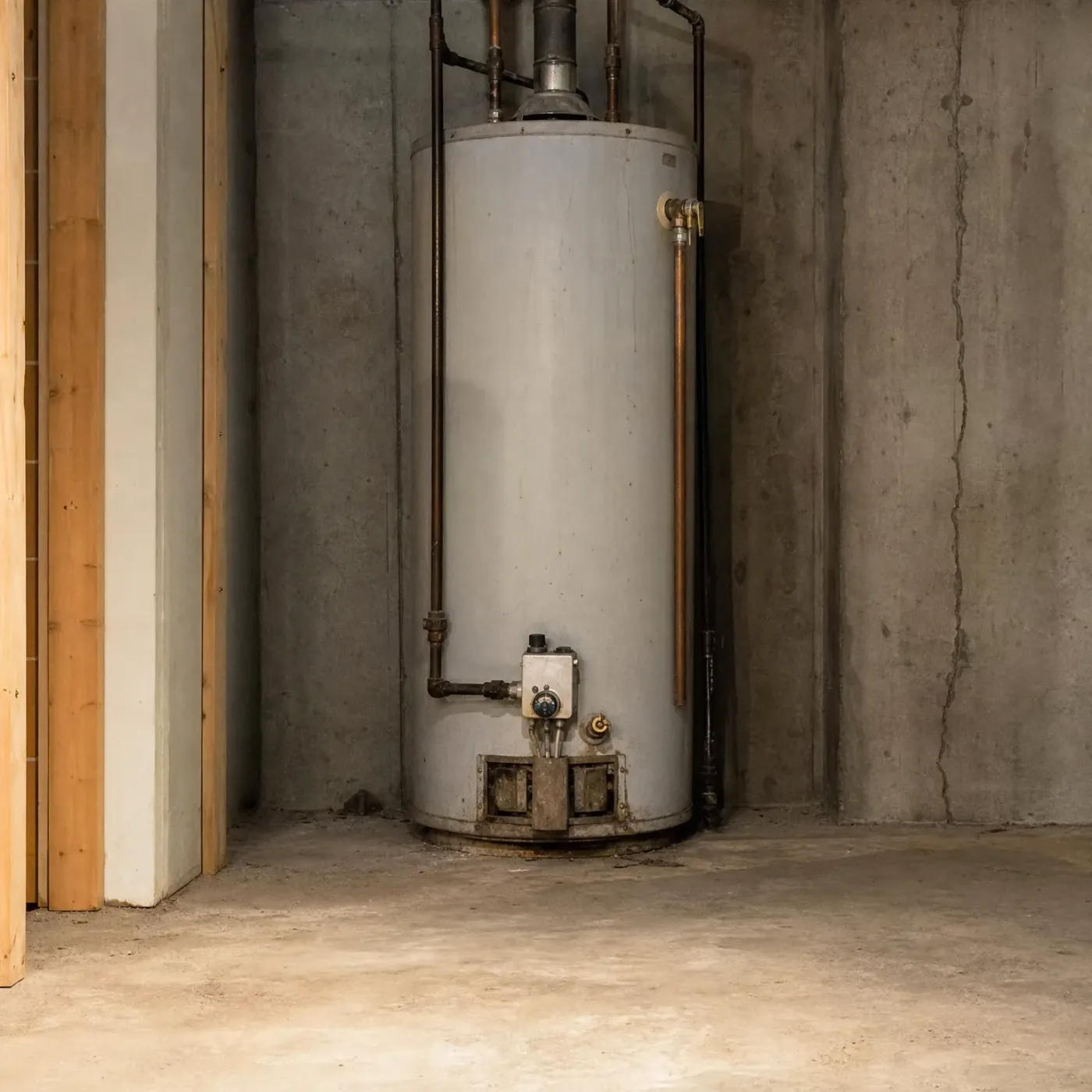
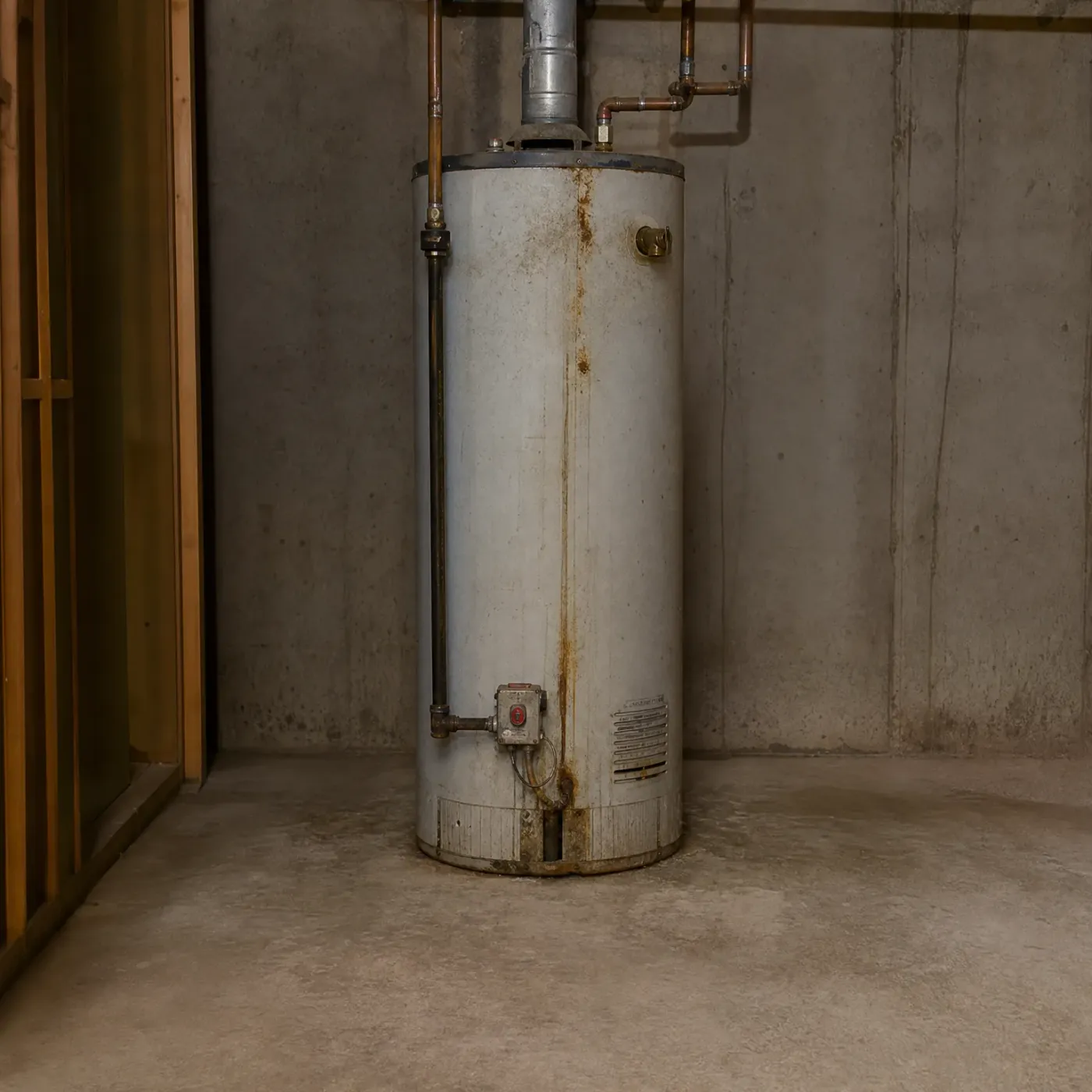
Rust like this on a gas water heater means the tank is failing, and once it's leaking, replacement isn't optional anymore.
Heat Pump or Stay With Gas
Good fit
Your garage or utility room has enough space around the unit, since it needs air volume to pull heat from, not a sealed closet.
You want to cut the electric portion of your bill, and a heat pump unit uses a fraction of the power straight resistance heating draws.
Your current water heater is electric already, so swapping to a heat pump model doesn't mean adding new gas or electrical work.
You don't mind the unit running longer on a cold morning, since it moves heat instead of generating it instantly like a gas burner.
You're open to a sealed or louvered utility door if yours is solid now, since the unit needs airflow in and out to work.
Stick with gas
Your gas water heater heats on demand and isn't affected by how dry or hot the air around it gets.
The space it sits in is small and closed off, which works fine for gas but starves a heat pump unit of the air it needs.
It's working fine right now, and there's no mechanical reason to replace a water heater that isn't failing.
A new gas unit costs less upfront to install than a heat pump water heater of the same tank size.
Your home doesn't have a 240 volt circuit near the water heater, which a heat pump unit needs and a gas tank doesn't.
No charge to send it. You decide if you hire them.
What the space around it needs
A heat pump water heater moves heat out of the air around the tank, so it needs somewhere to pull that heat from. Most units want a few hundred cubic feet of air around them to draw on, which is why a cramped closet works against the unit instead of for it. A garage or utility room usually has enough volume, especially in New Mexico where that space isn't also fighting humidity. The exhaust side matters too. As it strips heat from the air, it puts out cooler air in return, so the room it sits in will run a little colder than it did with a gas tank. In a small enclosed space that cooling is more noticeable. In an open garage it's not something you'll likely notice at all.
What that means for installation
Because the unit depends on airflow, where it goes matters more than it does with a gas water heater. A contractor who installs these regularly in New Mexico has already seen which garages and utility rooms work and which ones fight the unit, and can tell you before anything gets set in place. That also means checking the electrical circuit the unit will run on, since it draws power the old gas line never did. Getting that assessment right the first time matters more here than the brand of unit you pick. A local, licensed contractor who works on this equipment through the year is the one who can tell you whether your space is a good fit before you commit to one.
Before you get your water heater installationAfter you get your water heater installation
1
A fan draws room air across an evaporator coil inside the unit.
2
Refrigerant in that coil absorbs the heat and turns to gas.
3
A compressor squeezes the gas, raising its temperature further.
4
The hot gas passes through a coil wrapped around the tank.
61.7% of homes statewide heat with gas
Most houses here run a gas water heater, since gas heats well over half the homes in the state. Swapping to a heat pump model means adding a 240 volt electric circuit where there may not be one now, so part of the job is running that power to the tank, not just setting the unit in place.
ACS 2020-2024 5-year B25040
So is it worth it
For most homes in New Mexico, yes, if the space around the tank can give the unit the air it needs. The dry climate works in its favor, the power cost here doesn't punish you for switching off gas, and the main question left is whether your garage or utility room has the room for it, and whether a 240 volt circuit already runs there or needs to.
That last part is worth having someone look at before you decide anything. A local contractor who installs these year-round will know what your house's electrical panel can take and whether your space fits what the unit needs, without you having to guess at it. Once you request an installation, you're matched with one licensed contractor serving your area, and that contractor will reach out to go over your situation directly.
Water Heater Installation
A local pro for your water heater installation
Step 1 of 3: Equipment
A local pro who knows water heaters gets your details and gets in touch.
Describe your water heater job, and a local pro who handles it gets in touch.
Send the form and stop researching installers for the new water heater.
One request ends the search for a water heater installer.
Skip the round of in-home estimates for a new water heater.
Describe the project once instead of to every installer.
One installer gets your project, so there's no bidding war over it.
The pro who reaches out is licensed in New Mexico.