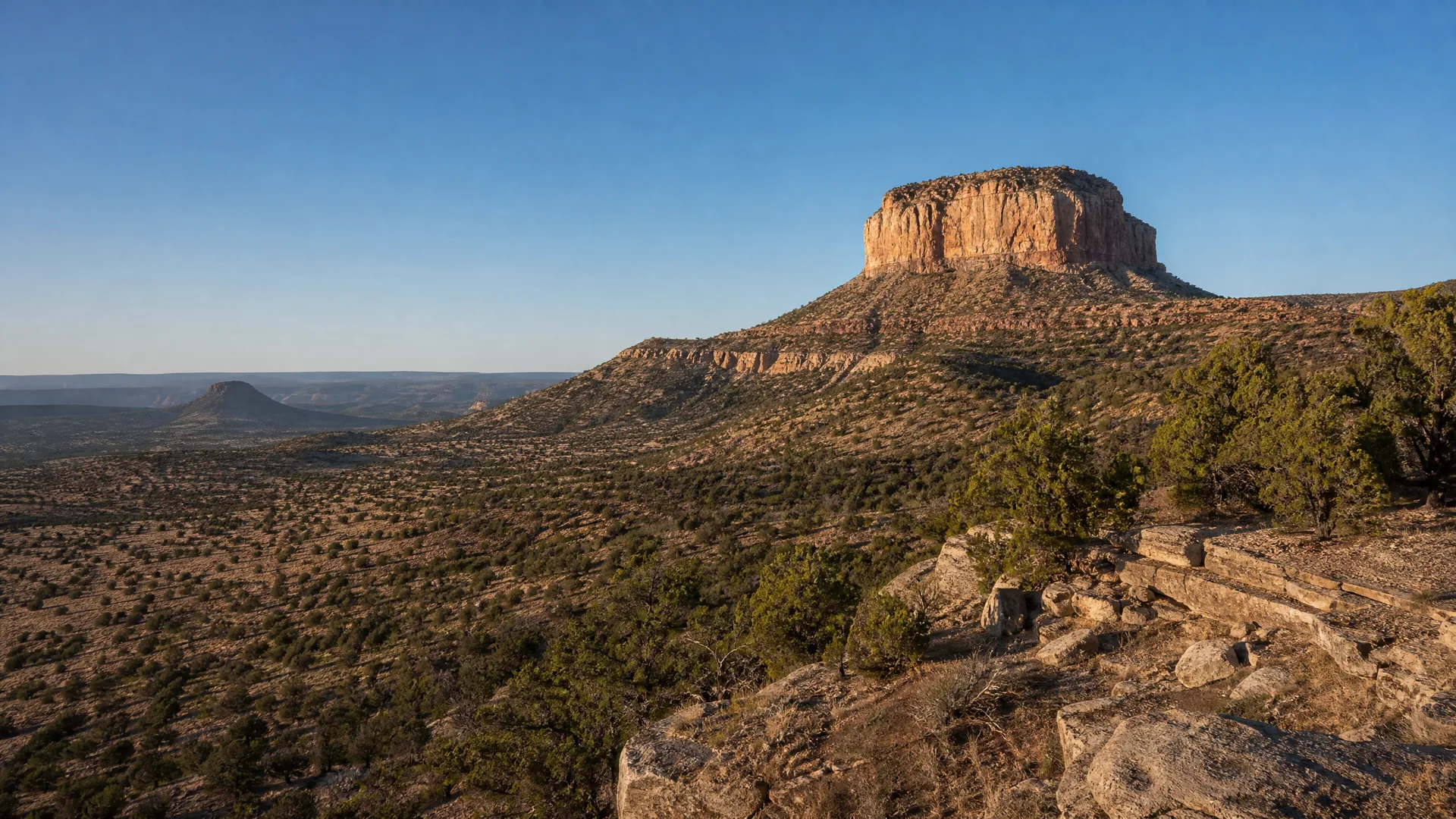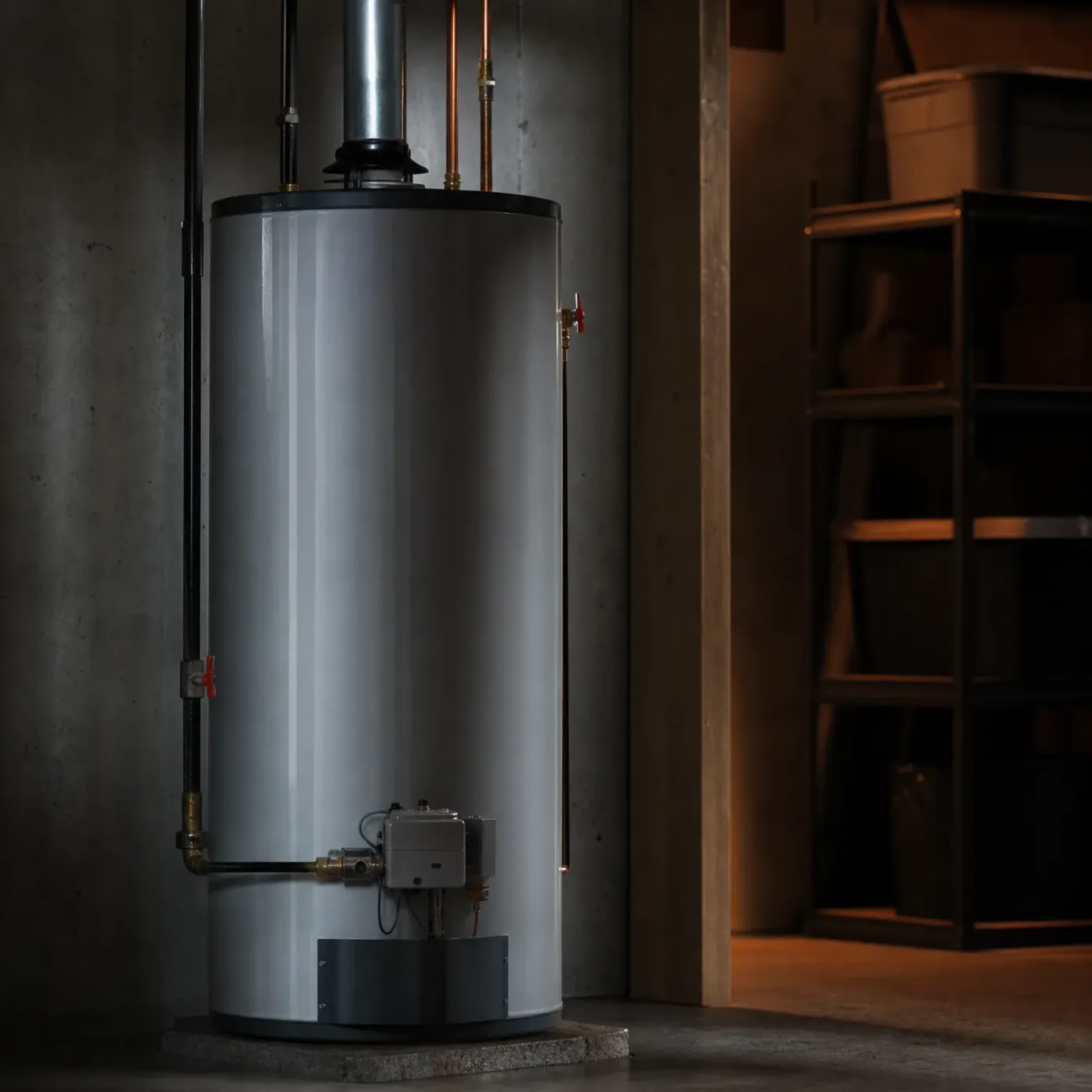
A large gray cylindrical gas water heater with copper and black pipes and a flue stack, standing on a concrete pad against a concrete wall, with a dark metal shelving unit in the background.

It's off your list after this

Tank or tankless water heater for a New Mexico home

Most homes in New Mexico heat water with gas, and that choice affects whether tankless makes sense for yours. This page gets into what a switch actually involves, and what stays the same if you replace your tank with another one. Send the form and skip the work of calling around and explaining your setup more than once.

Hand off the search

Most New Mexico homes do fine with a tank, but gas-fired tankless works well here too, and dry heat has nothing to do with the choice. What decides it is your gas line and how much hot water your house actually uses at once. A tankless unit needs a bigger gas line than most tanks run on, so switching usually means upsizing that line, plus new venting since tankless units vent differently than a tank. If your house already has a larger gas line, or you're building new, tankless gets you endless hot water and a unit that lasts longer than a tank. If not, replacing a tank with another tank is simpler and the gas line and venting you already have will work. Either way, this is a decision worth making before your current water heater fails, not during a cold shower while it's leaking.

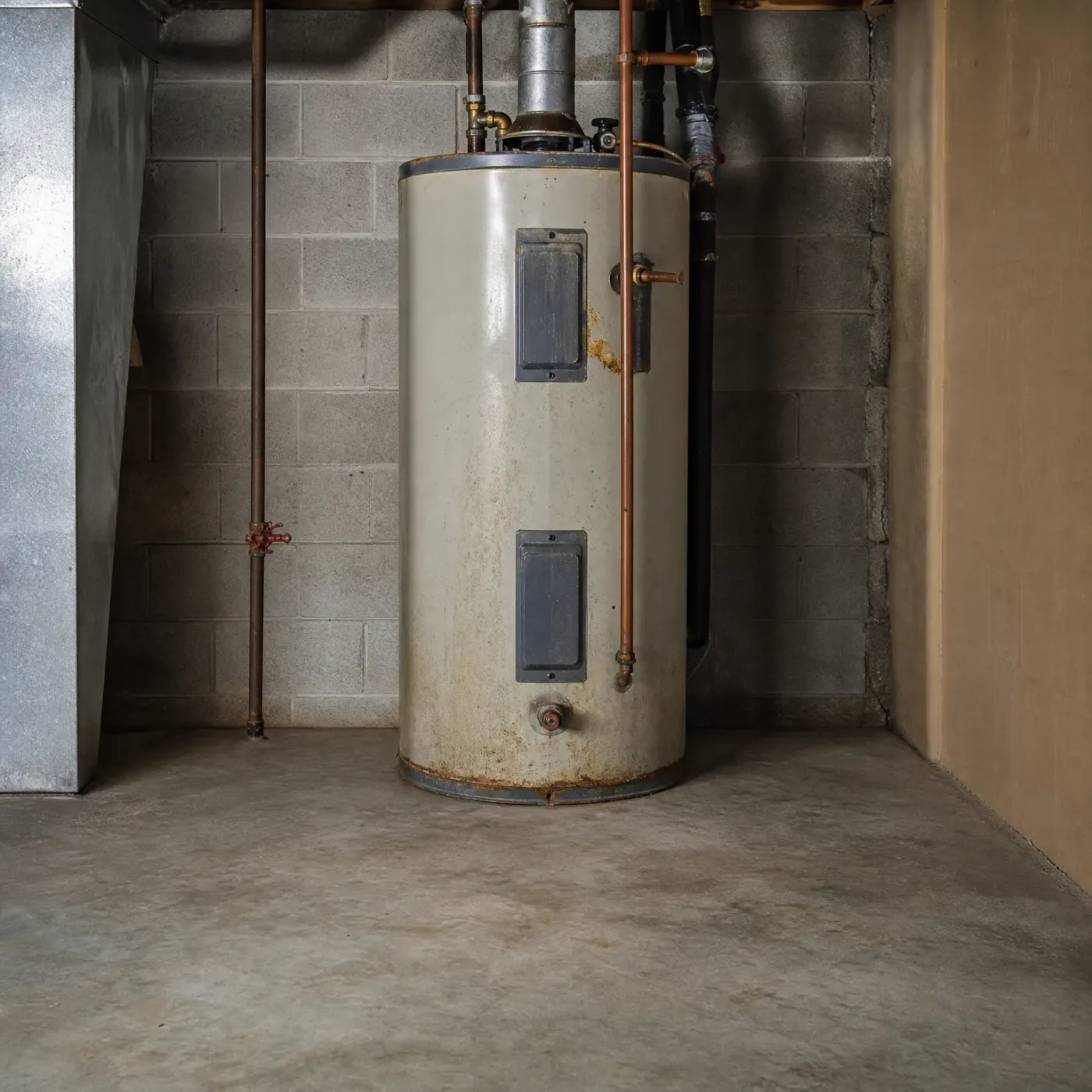
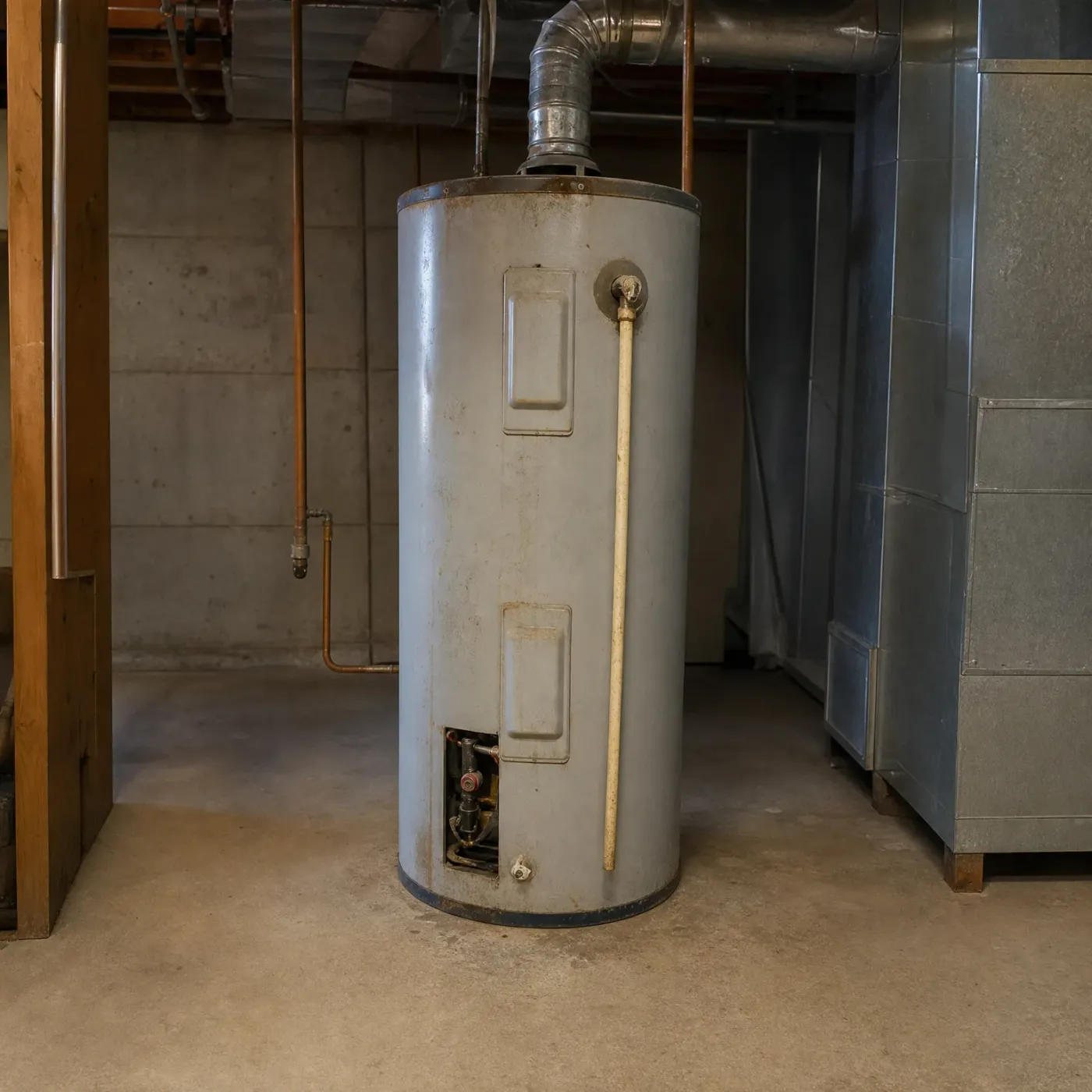
An aging cream-colored water heater with rust streaks and two access panels stands on a concrete floor against a concrete block basement wall, with copper and black pipes running up to the ceiling and a metal duct at left.
Before you get your water heater installation
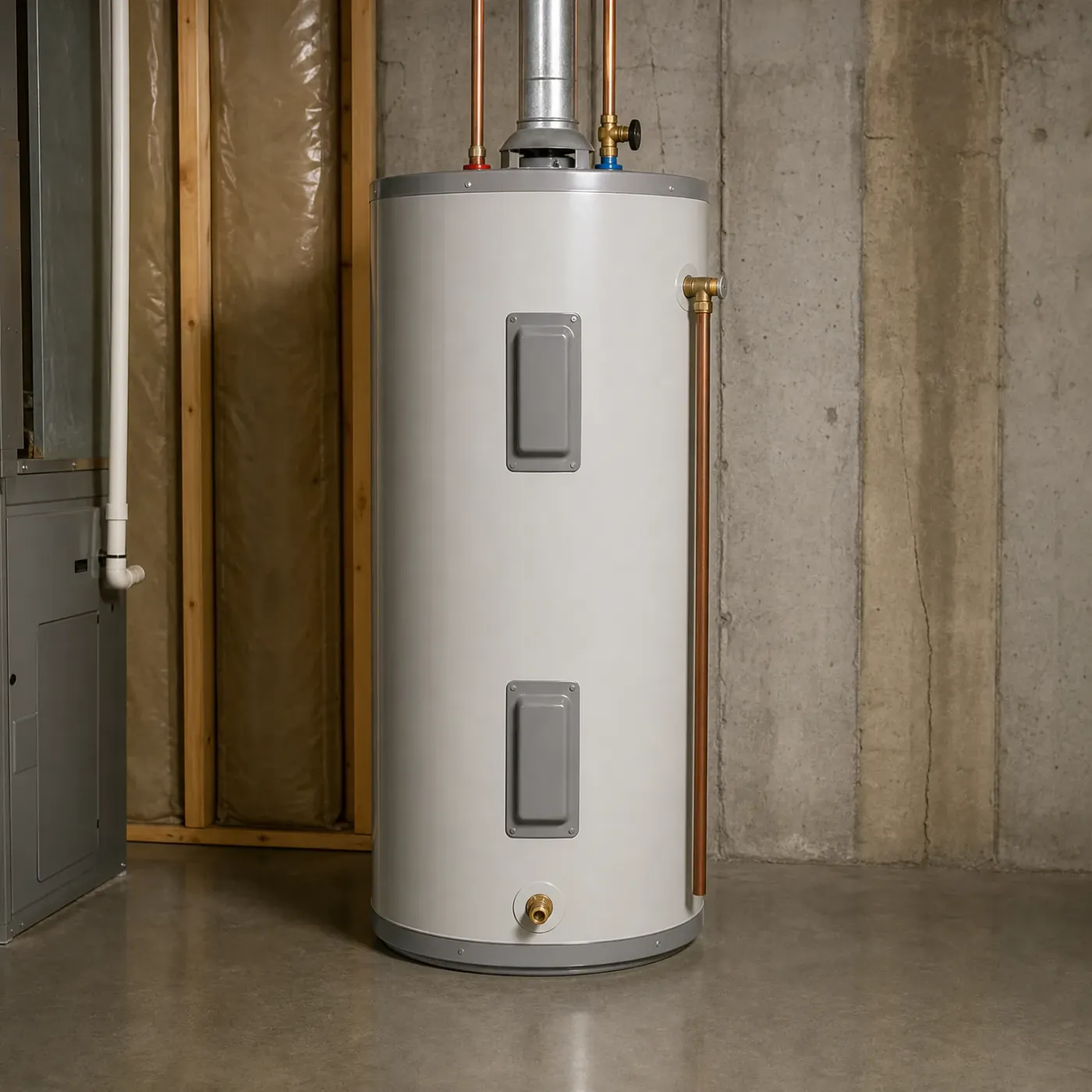
A white cylindrical water heater with two access panels, copper supply pipes and a metal flue, standing on a concrete floor against a concrete wall beside insulated wood framing and a gray electrical panel.
After you get your water heater installation

A tank spends all day keeping forty to fifty gallons hot, so there's always a reserve sitting there waiting. A tankless unit doesn't keep anything hot. It waits until a flow sensor picks up water moving, then fires the burner right then to heat water as it passes through. That's the whole difference in how they work, and it's why swapping one for the other isn't a straight trade. The gas line sized for a tank often isn't big enough for a tankless unit, since it pulls more gas in that one moment than a tank ever does, so running a larger line is common. Venting changes too. A tankless unit needs venting sized to its own burner, and that usually means putting in new venting rather than reusing what the tank used. One thing that surprises people: even though gas does the heating, the igniter and control board on a tankless unit run on regular household power. A tank has its own wear part instead, a sacrificial anode rod that breaks down over the years and needs someone to check it. Tankless skips that part entirely.

How each one actually heats water

  • A tank water heater keeps forty to fifty gallons hot around the clock, so it's ready the moment you turn on the faucet.
  • A gas tankless unit sits idle until a flow sensor detects water moving, then it fires the burner to heat water as it passes.
  • Switching to tankless on an existing gas line often means running a larger diameter line, since the unit draws more gas at once than a tank does.
  • A tankless unit also needs its own vent sized for the burner, which usually means new venting rather than reusing the tank's flue.
  • Gas tankless units typically need 120-volt power for the igniter and control board, even though gas does the actual heating.
  • A tank has a sacrificial anode rod that wears down over years and needs checking, a part a tankless system doesn't have.
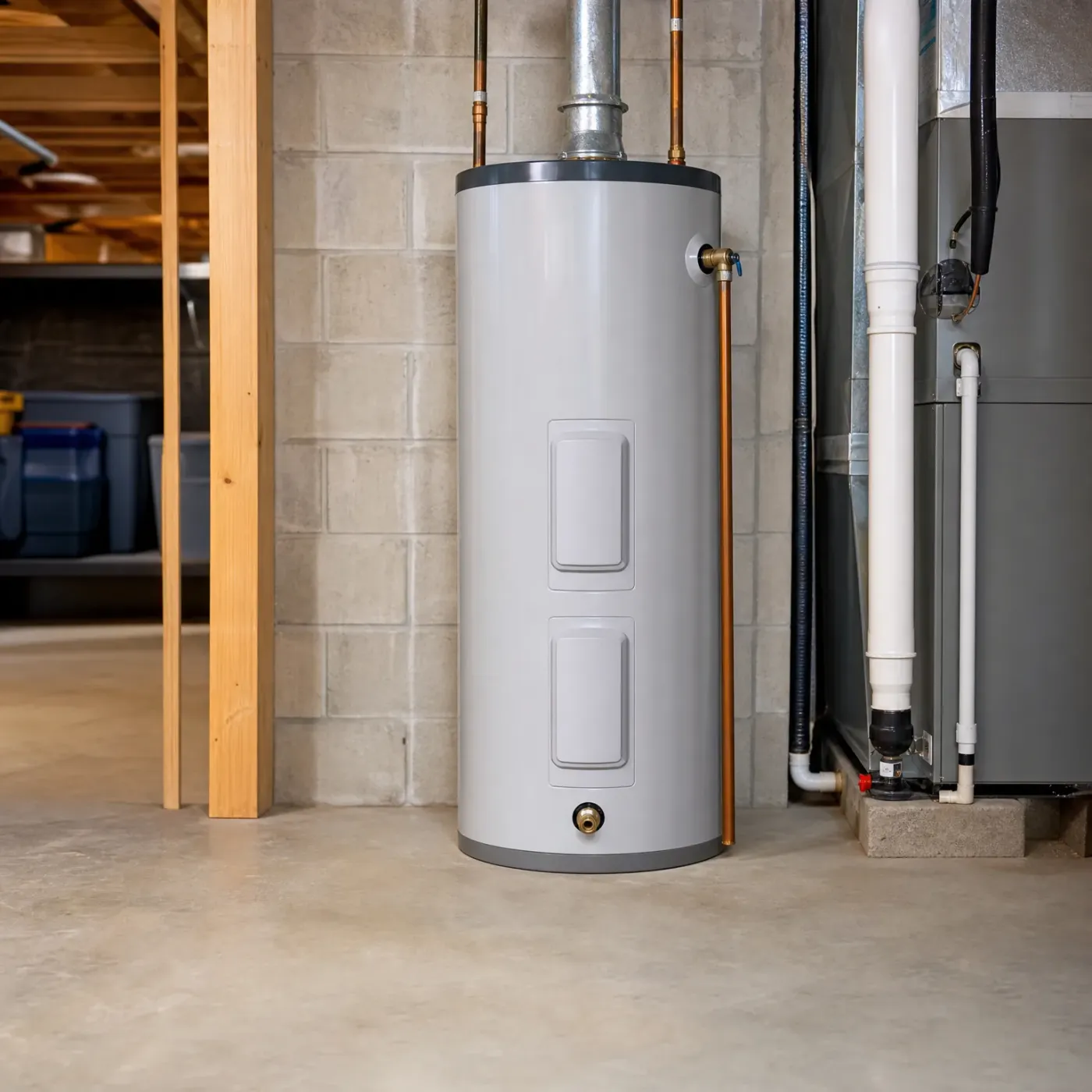
A gray cylindrical water heater with copper pipes stands against a concrete block wall in a basement, next to white PVC piping and a gray furnace, with wood framing and storage bins at left.
A tank keeps a reserve of hot water ready, so a bad element or a dying heating element shows up as rust and corrosion on the tank itself.
An older gray gas water heater with a metal flue pipe stands on a concrete basement floor beside ductwork and exposed copper piping.
Surface rust like this on an older tank usually means the inside is going the same way, and a leak is a matter of when, not if.
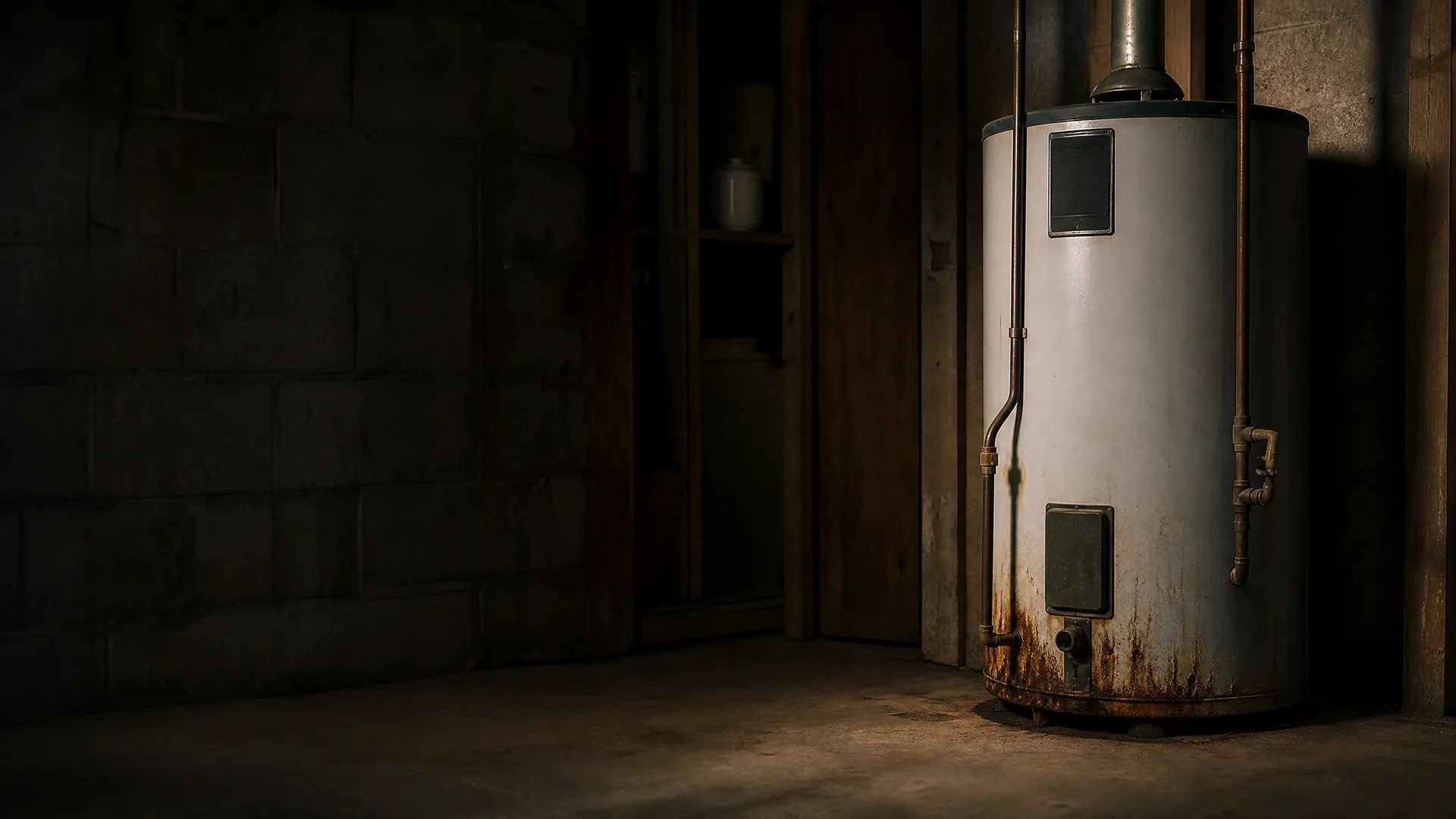
A rusting cylindrical water heater with attached pipes and flue stands in a dim basement corner beside a concrete block wall and a wooden door.

You go down to the utility room after dinner to grab something off the shelf, and the overhead bulb catches it before you're even looking for it. Rust streaks running down the side of the tank, pooling faint and orange where it meets the base. You crouch down and touch the floor near it. Dry, for now. Outside it's still warm, the kind of New Mexico evening where the heat from the day hasn't let go yet, but down here the air feels cooler, and you stand there a second longer than you meant to, just looking at the stain, doing the math on how long this tank has left.

Stop chasing a water heater pro

Deciding between tank and tankless is only half the job. The other half is finding someone who installs gas lines correctly for whichever one you pick, shows up when they say they will, and doesn't leave you guessing about the quote. That's the part most people put off, calling around, explaining the same thing three or four times, trying to tell a fair price from a rushed one. If your gas line needs upsizing for tankless, or your current tank is leaking and you need this handled without shopping it out yourself, send the form. One contractor gets your request, not a handful of them competing for your attention. From there, the search is off your plate, and you can deal with the actual decision, tank or tankless, with someone who can look at your setup and tell you what it needs.

What a gas tank can recover

A 40 to 50 gallon gas tank reheats faster than an electric one because the burner sits right under the tank instead of relying on an element inside it. Run a load of laundry and a couple of showers back to back and a gas tank usually catches up before the next person needs hot water. That recovery speed is part of why gas tanks hold up fine in most New Mexico houses without anyone feeling a pinch. Tankless still wins on back to back demand, but the gap is smaller with gas than it is with electric.


Why sizing is the real question

A tankless unit is rated for a maximum flow, usually measured in gallons per minute, and that number has to cover everything running at once in your house. Two showers and a dishwasher running together ask more of the unit than one shower alone. Undersize it and the water runs lukewarm when demand stacks up. A tank doesn't have that limit in the same way, since it's drawing down a reserve rather than heating water on the spot. Getting the flow rate right is what a proper installation sorts out before anything gets connected.

A gray-haired man with a beard in a blue button-placket shirt reclines on a couch with his eyes closed, beside a sunlit window with a green plant.
A woman in a cream knit sweater sits in an armchair with her eyes closed near a window showing yellow autumn foliage, with a mug on a round wooden side table beside her.

40 to 50 gallons

A tank gives you that much hot water sitting ready, then takes time to recover. Back to back showers on a big household can catch it still heating.

Skip calling around

Unlimited at a lower flow rate

Tankless never runs out, but it heats water only as fast as it passes through. Two showers and a dishwasher at once can outpace it.

Skip calling around

61.7% of homes statewide heat with gas

Most of New Mexico heats with gas, and that's the fuel both tank and tankless water heaters here run on too. If your house already has a gas line sized for a furnace, that's a separate question from whether it can handle a tankless unit's higher draw. Either way, the gas hookup is already there to work with.

ACS 2020-2024 5-year B25040

  1. A plumber shuts off gas, water, and power to the old unit.

  2. The old tank or tankless unit gets drained and disconnected.

  3. Gas line gets resized or rerouted if the new unit needs it.

  4. The new unit goes in, gets vented, and gets tested for leaks.

A closed dark laptop and a ceramic mug of coffee on a wooden dining table, with wooden chairs, a dark kitchen cabinet with cutting boards and a potted plant, and a leafy plant by a window in the background.

Either one works. The gas line decides which.

A 40 to 50 gallon gas tank will serve most New Mexico households without trouble. A gas tankless unit will too, once the gas line is sized for it and the venting is right. The deciding question isn't the climate here, it's what your house can support and how much hot water you actually run at the same time.

If you've been putting off a decision because you'd have to track down a plumber, check licenses, get someone out to look at the gas line, and then do it all again for a second quote, that part ends when you send the form. You still pick tank or tankless. You just don't have to find the person who installs it on your own.

A gray upholstered sofa with a matching cushion sits beside a potted plant and a wooden table holding a small green plant in a stone pot, near a curtained window.
A man in a gray sweater reclines in a brown leather armchair with his eyes closed, beside a wooden side table holding a mug, a folded newspaper and a potted plant, with a bookshelf and sunlit window behind him.
A man with greying hair and a dark sweater leans back on an armchair with his eyes closed and a slight smile, in a living room with a bookshelf, plant, folded newspaper and mug on a wooden table.
A man in a gray fleece jacket sits reclined in a leather chair with his eyes closed, in a room with bookshelves, a table lamp, a window, and a desk holding a folded newspaper and a dark mug.
A bearded man in a gray fleece pullover sits with eyes closed in a brown leather armchair in a living room, with a floor lamp, bookshelf, potted plants, a side table holding newspapers and a dark mug, and a bright window behind him.

Water Heater Installation

Finding a pro stops being your job

Skip collecting and comparing quotes for the new water heater.

A black-framed smartphone standing upright against a plain light gray background, its screen filled with solid green.
Step 1 of 3: Equipment